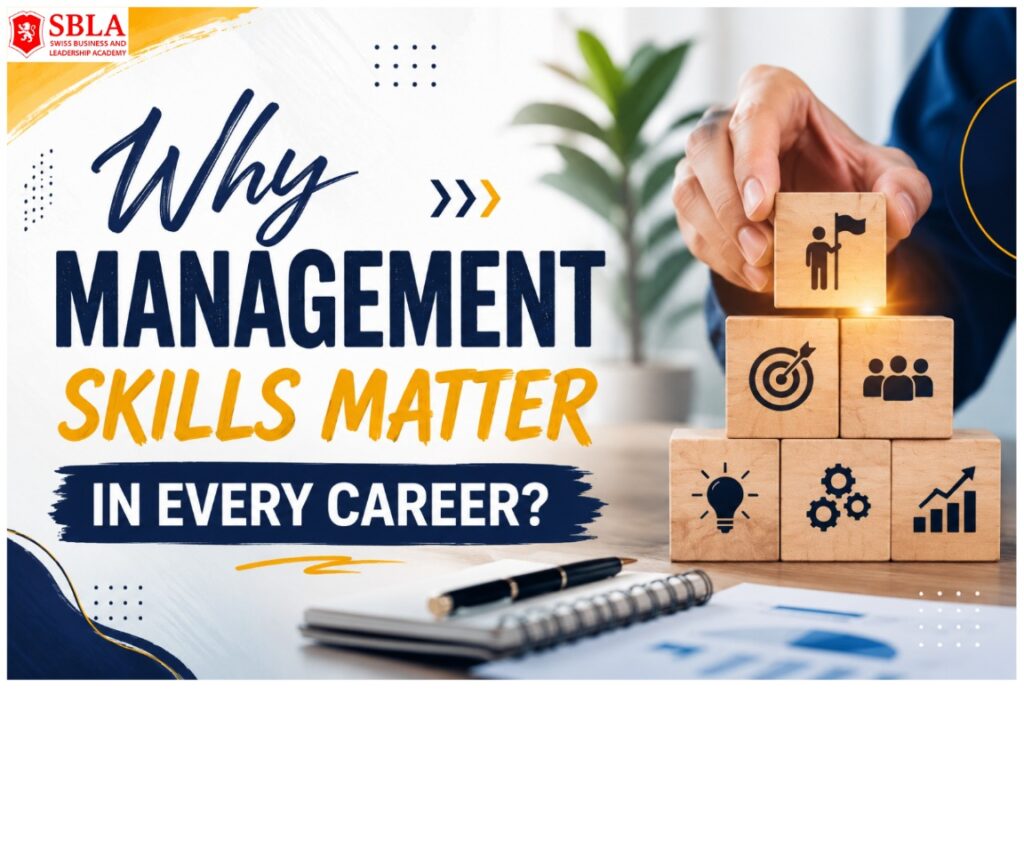
Success in today’s professional world is not determined only by technical knowledge or job-specific expertise. As careers grow, professionals are expected to communicate effectively, manage responsibilities, solve problems, work with different people, and make confident decisions.
This is where management skills become important.
Management skills are not limited to managers or people in leadership positions. Whether you are starting your first job, working as a team member, handling projects, or leading a department, these skills can help you become more organized, productive, and prepared for greater responsibilities.
-
Time Management – Making Every Minute Count
One of the most valuable professional skills is the ability to manage time effectively.
Professionals often have multiple tasks, deadlines, meetings, and responsibilities to handle. Good time management helps you:
- Prioritize important tasks
- Meet deadlines consistently
- Avoid unnecessary delays
- Maintain a better work routine
- Focus on tasks that create the greatest impact
Managing time effectively means managing your work effectively.
-
Communication – Turning Ideas into Action
Strong communication is at the heart of every successful workplace.
Whether you are speaking with a colleague, explaining an idea to a client, reporting to a senior, or coordinating with a team, the ability to communicate clearly can make a significant difference.
Effective communication involves:
- Listening carefully
- Expressing ideas clearly
- Asking the right questions
- Giving constructive feedback
- Understanding different perspectives
A professional who communicates well can build stronger working relationships and avoid unnecessary misunderstandings.
-
Decision-Making – Thinking Beyond the Obvious
Every career involves decisions.
Some may be simple, while others may have a direct impact on a project, team, or organization. Management skills help professionals evaluate situations, understand possible outcomes, and make practical decisions.
Good decision-making involves:
Understanding → Evaluating → Choosing → Acting → Learning
The ability to make thoughtful decisions can help professionals handle challenges with greater confidence rather than reacting impulsively.
-
Problem-Solving – Turning Challenges into Opportunities
Problems are a natural part of every workplace.
A missed deadline, a difficult client, a team disagreement, or an unexpected change can test a professional’s ability to respond effectively.
Strong problem-solving skills help you:
- Identify the actual cause of a problem
- Look at situations from different perspectives
- Develop practical solutions
- Take appropriate action
- Learn from mistakes
Instead of asking, “Why is this happening?”, effective professionals learn to ask, “What can I do to solve it?”
-
Team Management – Achieving More Together
Modern workplaces depend heavily on teamwork. Even professionals who are not managers need to collaborate with colleagues, coordinate tasks, and contribute to shared goals.
Team management skills help professionals understand how to:
- Work with different personalities
- Delegate responsibilities when required
- Support colleagues
- Handle disagreements professionally
- Keep everyone focused on common goals
A successful team is not simply a group of talented individuals—it is a group that knows how to work together.
-
Leadership – Taking Responsibility Before Getting the Title
Leadership is not just about having a managerial position.
A professional demonstrates leadership when they take initiative, accept responsibility, support others, and step forward when a situation requires action.
Leadership skills can help you:
- Take ownership of responsibilities
- Motivate others
- Build trust
- Handle difficult situations
- Encourage better performance
- Adapt to change
You do not need a leadership title to start developing leadership qualities.
-
Adaptability – Staying Ready for Change
Technology, customer expectations, workplace practices, and business strategies are constantly changing.
Professionals who can adapt quickly are better prepared to handle new responsibilities and changing environments.
Management skills encourage professionals to remain:
- Open to learning
- Flexible in their approach
- Comfortable with change
- Willing to develop new skills
- Focused on improvement
Adaptability can turn uncertainty into an opportunity for growth.
-
Emotional Intelligence – Managing Yourself and Understanding Others
Professional success is not only about what you know. It is also about how you respond to people and situations.
Emotional intelligence helps professionals understand their own emotions while recognizing the emotions and perspectives of others.
It can improve:
- Workplace relationships
- Conflict management
- Communication
- Team collaboration
- Stress management
- Leadership effectiveness
A professional who understands people can often handle workplace situations more effectively.
Management Skills Can Shape Your Career Growth
Developing management skills can benefit professionals at every stage of their careers.
- For a fresher, they can build confidence and workplace readiness.
- For an experienced professional, they can improve performance and prepare them for greater responsibilities.
- For a team leader, they can strengthen team coordination and decision-making.
- For a manager, they can improve leadership, planning, and organizational effectiveness.
Ultimately, management skills are not restricted to one job title or one industry. They are transferable skills that can support professionals across different roles and career paths.
From Managing Tasks to Managing Your Career
Your career is a journey of continuous growth. Technical knowledge may help you enter a profession, but strong management skills can help you navigate challenges, work effectively with others, take responsibility, and prepare for leadership opportunities.
The ability to manage time, people, decisions, challenges, and change can become one of your greatest professional advantages.
In a competitive business environment, developing management skills is not simply about becoming a better manager.